Must Hit By Jackpot: How Close Is Too Close?
The must-hit-by jackpot is a mathematical cage match, and the moment the counter creeps within a few dollars of the ceiling, every hungry slot vulture in the building circles the machine like it owes them money. But here is the brutal truth most players refuse to swallow: proximity to the must-hit-by threshold is not the same thing as profitability. The gap between "almost there" and "actually worth it" is where bankrolls go to die.
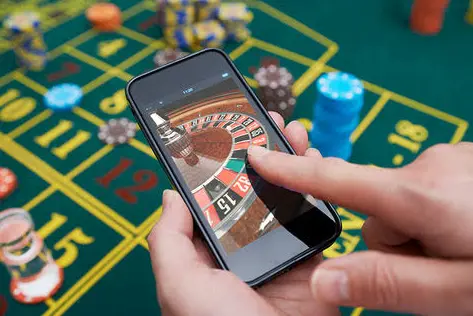
The Must Hit By Jackpot Is a Meter, Not a Promise
Every progressive system with a forced trigger runs on a hidden meter that increments by a fixed percentage of coin-in. The posted must-hit-by number is simply the upper bound of a random trigger window — not a countdown timer, not a guarantee that the next spin pops it. Operators know this, and they absolutely love watching players dump rent money into a machine sitting at 98 percent of the cap because they think the payout is "due." It is not due. It was never due. The trigger fires at a random point inside that window, and that window might have opened a thousand spins ago or it might open on the very next pull.

Expected Value Does Not Care About Your Feelings
Here is where the math gets vicious. A must-hit-by sitting at 99 percent of its cap can still carry negative expected value if the base game return is rotten and the trigger window is wide. The only scenario where jumping on a near-cap progressive makes sense is when the meter value, divided by the remaining coin-in required to reach the cap, produces a positive edge after factoring the base game house advantage. That is the calculation that separates professionals from tourists. You need the meter increment rate, the base game RTP, and the width of the trigger window. Without those three data points, "how close is too close" is a guess dressed up as strategy. 😤
The Trigger Window Is the Whole Ballgame
Wide trigger windows are the silent killer. A machine with a must-hit-by that can fire anywhere across a 50,000-dollar coin-in range is a completely different animal from one with a tight 5,000-dollar window. The tight window compresses variance and makes near-cap entry far more attractive. The wide window turns a 99-percent meter into a coin shredder because the remaining expected coin-in can dwarf the jackpot itself. Always ask: what is the largest possible gap between the current meter and the must-hit-by ceiling, and how does that gap compare to the jackpot size? If the answer makes your stomach turn, walk away. 🚶
Machine Behavior and the Phantom Edge
Some slots lock the base game into a low-return mode while the progressive meter climbs, quietly clawing back value that the jackpot will eventually return. Others keep the base game honest and fund the meter purely from a slice of coin-in. The difference is enormous, and it is buried in the paytable and the PAR sheet — documents players almost never get their hands on. This is why experienced hunters treat must hit by jackpot machines with cold, forensic suspicion. They do not trust the meter. They trust the math behind the meter, and they refuse to play anything they cannot model. The must hit by jackpot edge only exists when you can prove it, not when you feel it.
The Only Number That Matters
Forget the flashing lights and the crowd forming behind you. The only figure that decides whether a near-cap progressive is a play or a trap is the ratio of remaining expected coin-in to jackpot value, adjusted for base game return and trigger window width. When that ratio crosses into positive territory, you strike. When it does not, you keep your hands in your pockets and let the next sucker feed the meter. The house built this machine to bleed impatience, and the meter sitting at 99.7 percent of its cap is exactly the bait it uses to do it. 🎰